


Q&A with Geraldine Blanchot Fortier: A Story of Sustainability
News • September 1, 2025
By The Textile Eye Magazine
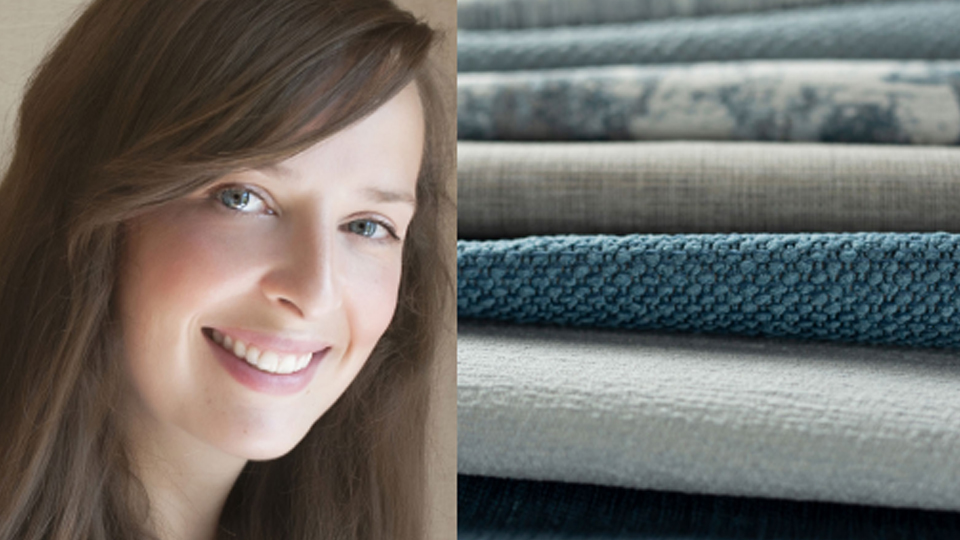
A deep, abiding love of textiles and sustainability led Géraldine Blanchot Fortier to found her Paris- and New York-based woven design consulting firm, Limn and Loom, rooted in both narrative and texture. Blanchot Fortier collaborates with Green Bay, Wisconsin-based Pallas Textiles, a brand who also holds sustainability at its core. Combining her French heritage with American influences, Blanchot Fortier weaves textiles that are timeless, enduring, and, in short, materials worth keeping.
Do you have an early, formative memory of textiles?
My earliest memories of textiles are actually tied to both of my grandmothers. My chic grandmother Nicole is very old now, but she’s always lived the quint essential Parisian lifestyle. Her homes were filled with beautifully upholstered walls in damasks and silks, mohair chairs, and wallpaper that probably cost a fortune.
My other grandmother, Colette, spent most of her life as an expat in Africa and the Caribbean. She was fascinated by fabrics and collected them everywhere she lived. She brought back exquisite silkscreens, mud cloths, and other local textiles when she eventually returned to the south of France. Her style was the opposite of my Parisian grandmother’s: refined country, but not the “French country” Americans imagine.
How did you come to your current career?
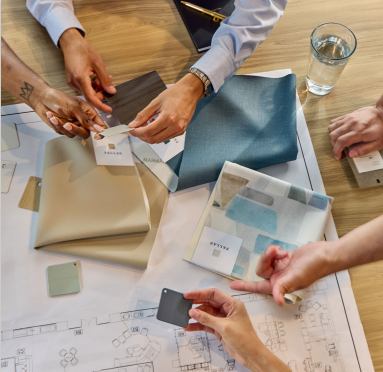
I studied at RISD without knowing exactly what I wanted to do. When I saw the textiles program, it clicked: I could draw, then make something tangible, and then see that something become part of something else. After graduating, I spent ten years working at a textile mill.
That experience gave me a deep understanding of the technical aspects of woven textiles and all the complexities that come with working at a mill.When I started at Interface Fabric, it was still Toltec. Ray Anderson was still on board, talking about “zero footprint” and all these sustainability efforts. I got to attend his talks, which became an early formative sustainability influence for me—that knowledge continues to inform my design process today.
That led me to start Limn & Loom, a woven design consulting firm, and begin collaboration with Pallas. Looking back, I can see my grandmothers’ influence woven into everything. The Parisian aesthetic gave me a deep respect for craftsmanship, my fascination at the mill with how things are built came from that. My other grandmother’s textile collecting taught me to embrace cultural richness, tactile diversity, and the soul of a material. Together, those influences gave me the instinct to create a company that merges texture and narrative.
What kinds of creative work do you take on?
We’re both a studio and a connector. We consult on color development, design strategy, and sustainable product innovation.
Tell us about how French culture influences your work.
Limn & Loom kind of exists between two worlds: the structured, more industrial pragmatism of American manufacturing, and the poetic sophistication I associate with French design. French culture has definitely shaped my instinct to edit and focus on details. It’s also influenced my appreciation for materials that age gracefully. The “City Mouse, Country Mouse” sensibility I inherited from my grandmothers informs my work too, balancing luxury with warmth, timelessness with approachability, and always aiming to make textiles that endure. I really don’t want to create things that just stop people in their tracks for a fleeting moment. I want them to stand the test of time to be beautiful and usable in a lasting way. To me, that’s true sustainability.
Do you have a personal creative outlet?
Most of my creativity is tied to building my company, so I’m lucky that my passion is also my work. I’m the kind of person who’s constantly absorbing things I see, feel, and touch. I’m super-observant, almost like a human sponge. I’ll walk around Paris or New York and spot a really interesting weave on someone’s shirt or pants.
Over the years, I’ve filled notebooks with palette studies and texture ideas. I also love photography. When I’m in France, I’ll wander and photograph old buildings where textures are peeling away, revealing muted traces of past colors. Those weathered, layered surfaces inspire me, maybe they become part of a palette, maybe they spark a new texture. I’m drawn to light, shadow, composition, and repetition.
How do you begin a project?
I’ve developed a fascination with using digital tools in unconventional ways. When I first started Limn & Loom, I did a lot of painting and drawing, then scanned the work in. But I got really good at [Adobe] Illustrator, and then started using it in ways other people didn’t. I love pushing Illustrator’s boundaries exploring its more obscure functions, mixing them together, and seeing what happy accidents happen.
When I launched my company after leaving the mill, I was so used to working with yarn palettes that I created a digital equivalent. Now I have a huge library of these textures, and they give my digital designs a woven, tactile quality I love. That’s become central to my process. My fascination with manipulating digital tools feels a lot like painting without a set end point.
How do you translate your inspirations into collections?
For me, design is both artistic and technical. There’s the fascination with the tools, but also the artistic exploration. I often start my process with a mood or a goal: Do I want it to feel organic? Geometric? That’s really my design process; it evolves as it goes. I love working that way because it keeps me on my toes—inspired, and excited.
How do you work with the Pallas team when developing a new collection?
We start by aligning on an overarching concept and narrative, something that’s important to the storytelling. From there, I build constructions, palettes, and patterns alongside these discussions.
What role does color play in your process?
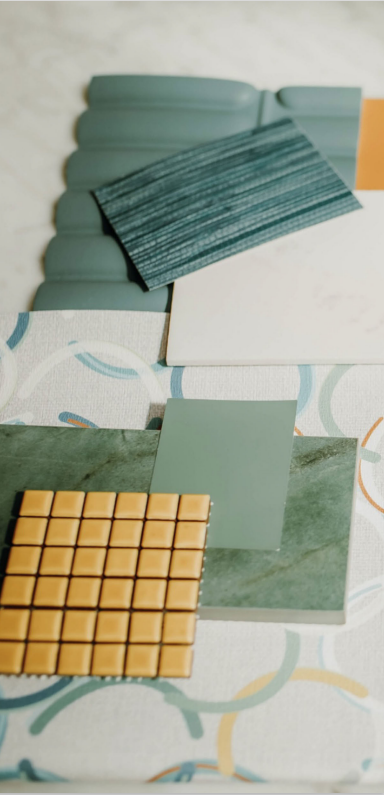
Color is a very emotional thing, it’s definitely the first emotional note in my design process. For me, color is deeply connected to personal memories, childhood experiences, and fabrics I’ve encountered over my life.
How do you develop palettes that feel timeless, yet fresh?
My goal is always to design colors that resonate emotionally, remain relevant, and are timeless. I keep coming back to timelessness because I think true sustainability lives there.
Do trends play a role in your work?
I see trends less as instructions and more as cultural signals, indicators of what people are craving emotionally or aesthetically at a given moment. If a trend aligns with the narrative I’m building, I might weave it in subtly, but never in a way that overshadows longevity or the vision I have.
What drives recent sustainability choices?
What drives my sustainability choices is a mix of urgency and a deep sense of responsibility. I have three kids, and when I look at how much trash we generate daily, it genuinely disturbs me. I know textiles must evolve to meet environmental and performance expectations.
Part of that thinking is inherited as both of my grandmothers lived by a “buy once, buy well” philosophy. That ethos shaped how I design. I focus on durability, timelessness, and creating materials worth keeping.
What factors do you take into account when selecting suppliers?
Right now, we’re focused on partnerships where the products are actually available to us, but we’re always keeping our eyes and ears open. If you don’t partner with a company that can reliably provide that fabric for the next 10, 15, even 20 years, you risk making a failed investment.
The Reve Collection and other recent Pallas launches explore biodegradable materials and ocean-recovered fibers. What drives these sustainability choices?
Luckily, we partner with a lot of mills that follow ACT guidelines, so if they have internal test labs, we usually trust what they provide. For example, with Hyphyn, the mill took on most of the R&D.
How do you work with different mills?
I have a very technical background and know how to actually build a fabric; I understand very well what finishing processes are important to achieve performance characteristics and all that. I’m able to select what mill I think is the best partner.
What qualities matter most when selecting a supplier?
So there’s equal parts faith, trust, and communication, and also a long-term partnership component.
Are all patterns created in-house by you and Pallas?
At this point, everything is done by Limn & Loom and Pallas in a collaborative way. I’d call it in-house since we’re essentially their hired design team. We manage the entire line, and I have my hand in everything that’s launched in any given year, alongside Dean (Lindsley, vice president of Pallas Textiles). It’s a very collaborative decision-making process, but we’re always aware of what we’re doing and I’m very conscious of the brand, its needs, and its direction. That awareness helps ensure a deeper, more cohesive narrative that has enduring authenticity and clear messaging.
What do you do when you feel creatively blocked?
Luckily, I run a company, so design is only one part of what I do. I also handle legal contracts, finances, everything. If I feel creatively blocked, I often switch to something very pragmatic and practical. That way, I can focus on a clear task with an end goal instead of trying to chase an elusive idea. My training taught me to embrace creative blocks as part of the process, more like a pause for reflection than a failure.