


Pallas Looks to Monet to Reimagine a New Textile Line
News • August 19, 2026
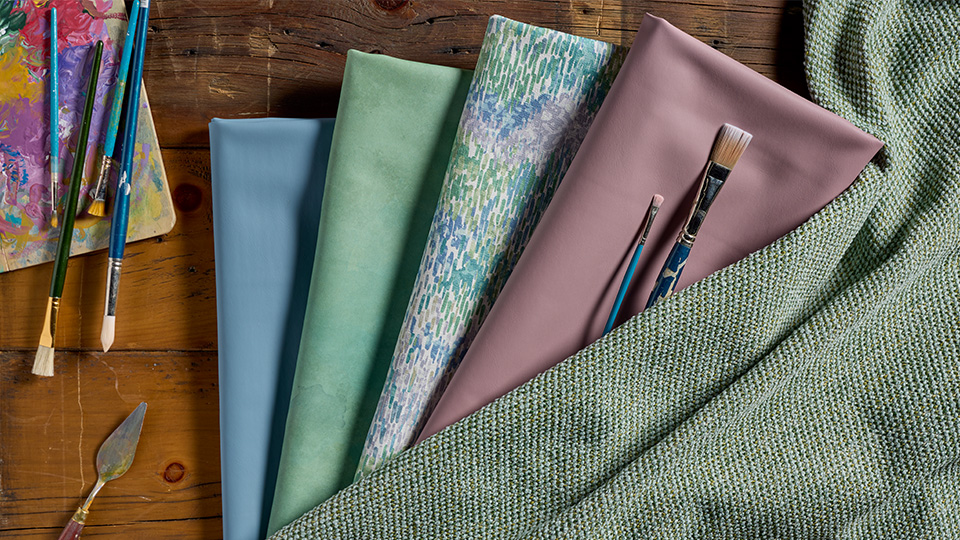
Inspired by Claude Monet’s work, the new Giverny Collection translates Impressionist principles while advancing the brand’s ongoing textile sustainability efforts
By Metropolis Editors
What happens when the principles of Impressionist painting move from an art piece to interior fabric? For Pallas, the answer is Giverny, a new collection of performance textiles designed by Geraldine Blanchot and inspired by Claude Monet and his obsession with light, color, and nature. Named after the northern French village where Monet lived and worked, the collection interprets elements of his visual language through upholstery, while continuing Pallas’s broader push toward more sustainable materials and manufacturing.
METROPOLIS spoke with Pallas Textiles’ Brand Manager Abel Shoup in the METROPOLIS Sustainability Lab at NeoCon about the thinking behind Giverny, the relationship between art and interior environments, and how the company is working to expand the possibilities of sustainable textiles.
Pallas describes itself as more than a textile maker. How do you define the role the brand plays in shaping spaces and experiences today?
Abel Shoup: Pallas Textiles is a performance upholstery provider, but beyond that, we like to think of ourselves as a brand that can elevate, refine, and sophisticate spaces for the design community. We want to take it a step further than simply providing material by asking ourselves: How do we take a space and make it into something that creates an experience?
Tell us more about this new collection inspired by Monet’s work. Why was Pallas interested in translating his work into a textile collection?
AS: There are a couple of layers to that story. One, obviously, is Claude Monet, and how we looked at the Impressionist movement. Monet famously said, “I have no greater desire than to mingle more closely with nature.” He looked at light and movement and incorporated those ideas into his paintings.
You get this beautiful work that takes color, movement, and light and makes them into something a little bit different. Now we have an opportunity to bring that—and his techniques, which still affect how we design spaces today—into textiles. How do we take art and interpret it as textiles?
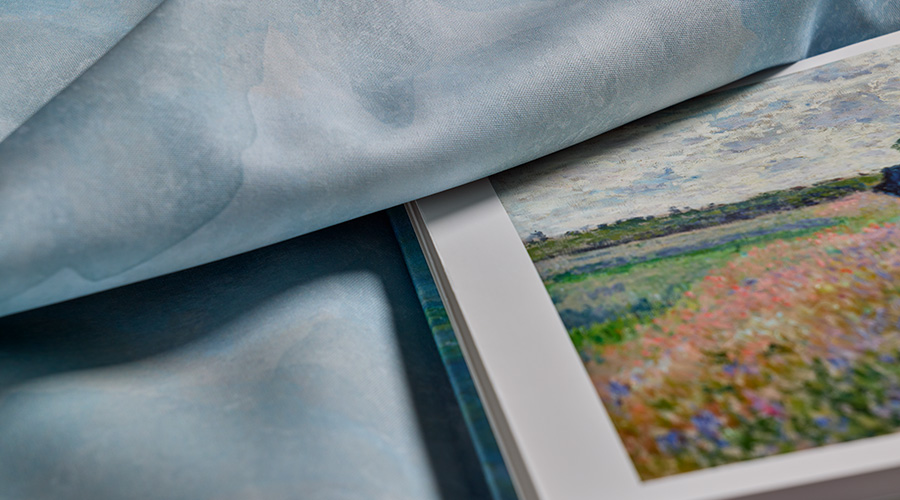
If you look closely at some of the designs in the collection, you’ll see inspiration and interpretations of some of Monet’s most famous paintings.
At the root of it, there’s artistry, light, pigment, and the idea of taking nature and pulling it back into the spaces we’re interacting with every day.
What has been the response to the collection, particularly from architects and designers?
AS: All positive. We’re so grateful, and we see and understand the design community as a group of artists.
We took something that still inspires us today—again, how does light interact with a space? How do things move within a space?—and put that into a textile collection. Now that it’s been reinterpreted, it allows designers to take those attributes, which are valuable and critical to them in their world, and use and apply them in the spaces they’re designing.
Pallas has also been investing heavily in research and development around sustainability and materials. How does that work intersect with the Giverny Collection?
AS: Sustainability at Pallas is a core pillar; we’re very proud of that. More recently, as more sustainable innovations and materials become available, what’s exciting is that we can continue that sustainability journey. And I say “continue” because we don’t want to think of it as having a start and a destination, right? It needs to be continuous. There are always more ways to improve.
There’s always more to bring to market, more to make available. The big question we get from the design community is: “I’m the designer, and I’m being asked to do more, faster, and make it more sustainable. But I don’t have many options available, and there are always deadlines. How can my work be more sustainable when those options aren’t available?”
If we look back over the last two and a half or three years, with In Good Company [collection], we brought those circular materials to market, and with the Reve collection, we brought biodegradable vinyl. More recently, early this spring, we got a net-zero, bio-attributed product to market, and now with this collection. What’s exciting is that you have that baseline suite of sustainable materials; we can bring a new collection to market where every single material has a sustainability story behind it.
Now you have the full gamut for the designer. You have [more] choices available.
But for Pallas, it’s a journey, and it takes a village. The next step for us—and you saw it in the [METROPOLIS] Sustainability Lab—is: How do we take this and apply it now to furniture and the rest of the spaces and pull them along?
We’ve got the materials now, the sustainable surface materials. Now let’s take a step into furniture and move a step further in this journey.


Beyond its sustainability credentials, what do you think designers should understand about Giverny?
AS: Besides the sustainability aspects we discussed, I think we’re very honored and proud to incorporate the work of Monet and the Impressionist movement in general. Those qualities, traits, and techniques still drive and shape spaces today. So being able to bring that full circle and say, “We understand and know that this is critical and important to you and your role, and now we’re going to infuse that into a textile collection,” just feels good.
It’s a really rich story. Geraldine Blanchot, the designer of the collection, grew up in France, specifically in Giverny. She sat in the same places and drew inspiration from the same place that Monet himself drew inspiration from. There are just layers and layers to it, and sustainability is a critical layer of that.
But it felt like one of those collections where you could take everything you wanted, put it into one collection, and bring it to market.