



Behind the Design: How Claude Monet Became Inspiration for Textiles
Blog • June 16, 2026
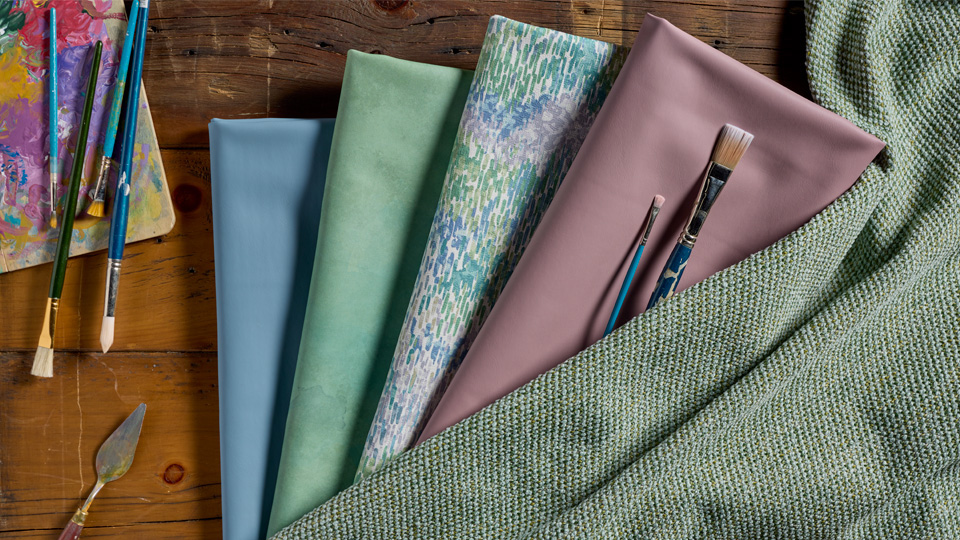
Step inside the gardens and explore the making of the Giverny Collection, our latest textile designs.
For centuries, the same artistic principles have guided how designers shape space: how light moves, how color interacts, how texture creates atmosphere. With the Giverny Collection, Pallas Textiles brings those foundational elements—rooted in Impressionism and the work of Claude Monet—into textiles designed for modern commercial interiors.
Translating Light, Color, and Movement into Material Form
This collection is not about replicating art. It is about translating the tools artists use to create emotion into materials designers can specify with confidence. Impressionism marked a shift away from rigid structure toward experience. Artists like Monet focused on:
- Light over line
- Atmosphere over form
- Emotion over exact representation
These same principles remain essential to interior design today—particularly in environments where designers are asked to balance performance with well‑being, softness with structure, and visual interest with calm. The Giverny Collection embraces these ideas through:
- Layered color rather than flat fields
- Organic movement rather than hard repeats
- Texture that adds depth without visual noise
The result is a collection that supports space‑making—not surface decoration.

The Textiles of the Giverny Collection
Named for the gardens at Giverny, France, where Monet lived and painted, the collection draws inspiration from the gardens that served as his lifelong subject. These landscapes were not static compositions—they changed constantly with season, weather, and time of day. Rather than referencing a single painting, the collection pulls from recurring visual themes found in nature used throughout Monet’s work.
Each textile in the Giverny Collection translates these principles into material form, resulting in designs that feel atmospheric, layered, and intentionally restrained.

Named for Claude Monet, the Monet pattern draws directly from the artist’s lifelong study of the gardens at Giverny, distilling the essence of Impressionism’s painterly language through layered fields of color and rhythmic, brush-like transitions. Monet is well-suited for large or small-scale applications that require visual calm without sacrificing richness.
Named for the French word for water lilies, Nymphea draws directly from Monet’s most iconic subject. The design reflects the study of rippled reflection and scattered light. With its canvas-like weave and refined tactility, Nymphea becomes a woven meditation on perception, renewal, and the poetry of observation.


Translating to sky, Ciel captures the expansive, atmospheric quality Monet often explored above the horizon line. The textile emphasizes diffused color and gentle movement rather than a defined motif, transforming stillness into radiance. Its subtle patterning allows it to function as a grounding element in environments where visual ease is essential.
Meaning mist, Brume reflects moments Monet frequently painted during the soft haze of early morning at Giverny. Soft transitions and layered texture give the textile a sense of depth without visual weight. The design is artistically understated, making it well-suited for applications where texture and mood are desired without distraction.


Translated as dawn, Aube draws from early morning light, when color emerges from the shadows. Gradual tonal shifts and organic movement mirror the quiet transformation Monet captured at the start of the day. The result is a textile that brings a smoothness to interiors and invites composition within a space.
Referencing the canvas itself, Toile grounds the collection in materiality and process. Inspired by the painter’s canvas this innovative fusion of woven and nonwoven materials takes precedence over motif, acknowledging that Monet’s work was as much about surface and layering as subject matter. This design provides a tactile foundation within the collection, offering visual interest through structure rather than pattern.


Where Memory, Landscape, and Design Meet
For Geraldine Blanchot, who designed the collection, the inspiration behind Giverny is both artistic and personal. Growing up near Giverny, immersed in the same landscapes that influenced Monet, and spending time as a preteen in the gardens at Giverny, Geraldine brings a lived understanding of how color, light, and movement interact in nature. That perspective shaped how the collection was developed:
- Avoiding literal translations of paintings
- Prioritizing emotional resonance over motif
- Designing patterns that feel intuitive rather than imposed
As a seasoned textile designer, her role ensured the collection feels authentic, contemporary, and usable—bridging fine art sensibility with the realities of commercial specification.


From Painterly Expression to Performance Textile
One of the defining challenges of the Giverny Collection was translating painterly qualities—often fluid and expressive—into repeatable, production‑ready textiles. This was achieved through:
- Softened transitions that avoid harsh start‑and‑stop moments
- Pattern scales designed to work across upholstery and architectural surfaces
- Visual rhythm that creates movement without distraction
For interior designers, this means textiles that enhance space rather than compete with it—particularly in workplaces, hospitality environments, and healthcare settings where atmosphere matters.


Sustainable Materials for Inspired Interiors
While rooted in artistry, the Giverny Collection is engineered for commercial performance. This collection is supported by Tekloom® Air Bio, a USDA‑approved bio‑preferred material, in addition to HYPHYN™ biodegradable vinyl, and SEAQUAL™ YARN all contributing to sustainability. This allows designers to specify expressive textiles while meeting performance expectations—without sacrificing sustainability or longevity.
An Immersive Look at Giverny
The Giverny Collection debuted during Design Days at the Pallas Textiles Inspiration Center, located at 1045 W. Fulton St., 8th Floor, Chicago. The space offers interior designers an immersive opportunity to experience the collection’s materiality firsthand. Presented alongside KI and KI Wall, the Inspiration Center highlights how textiles, furniture, and architectural surfaces work together, reinforcing the role of foundational artistic principles in shaping cohesive interiors.


The Lasting Impression of Giverny
The Giverny Collection reminds us that the most enduring spaces are built on timeless ideas. By translating Impressionist principles into high‑performance textiles, Pallas offers designers tools that support emotion, atmosphere, and connection—without sacrificing function.
Because Giverny was never about recreating a garden.
It was about carrying its light, movement, and feeling into the spaces we shape.